Saturday, October 29, 2011

Sixth Blog: A World of Surveillance

What is privacy? In the United States, we feel as though our privacy is a part of our American privilege. With all new technology our privacy is deeply endangered. Your every move and information that you put on the Internet can be tracked, traced and stored without your knowledge. In Simson Garfinkel's book Privacy and the New Technology: What They Do Know Can Hurt You he say’s "It's a future in which what little privacy we now have will be gone. Some people call this a loss of privacy” (Garfinkel). We are slowly becoming a society that George Orwell predicted in his book 1984. A future where our every move is tracked or stored and what media we view is censored.  
Even Google has had a great impact on our Internet lives and privacy. Googlization is happening, even though it may not be as clear we would like. In Siva Vaidhaydanathan's book The Googlization of Everything: And Why We Should Worry Siva puts it best by saying "we are not Google's customers: we are it's product". Even though we many not like to think it, Google does affect different areas of our lives. Google affects our personal decisions like our political opinions or our moral ideas on subjects like abortion or gay rights. Google also has the power to control and survey almost the entire world. Almost everyone use’s Google and because of this, it’s power just keeps growing. Google keeps track of what you do on the Internet, your likes, dislikes, what your favorite food is and even your fetishes. They even show you advertisements based on your likes. If you are worried about Big Brother Google watching your moves you do have the option to change your privacy settings to make it harder for them to track you. But when that happens Google slows down your services. 
Google even stores everything about us. For example, during class we had three people go and Google their names. Nothing came up when the first boy searched his name. I was the one who searched my name second. But when I looked up my name nothing about me showed up. The third boy went up and videos and pictures and news articles popped up about him. This was because he had played juniors hockey and the almost everything that came up was about his hockey life. Even though nothing came up when I searched my name there is a lot of stuff on the Internet that I have posted or things that have been posted about me. If you look up my name and my old high schools name, lots of old athletic records and race times come up. On the other hand if you search my main Internet name, lots of things come up. I have a vast life on the Internet but I never use my real name, only my one username.
If there ever is a day where Google does decide to use our information, we have a lot at stake and in the open. It just goes to show that we need to be careful what we post on the Internet. You never know who will end up with your personal information in their hands.  

Tuesday, October 25, 2011

Fifth Blog: Music Downloading


            During this week’s readings and class discussions revolved around piracy. In Lawrence Lessig’s book Free Culture: the Nature and Future of Creativity Lessig claims that the most commercial piracy is “the unauthorized taking of other people’s content within a commercial context”. In the past 10 or 15 years, technology has made it incredibly easy to pirate music, video, computer applications and even books. Many people now share mp3 files with each other instead of paying for them either by buying a CD or by purchasing it online. Lessig claims that there are four different types of file sharers. Type A is “someone who use sharing networks and substitutes for purchasing content” also known as someone who downloads instead of purchasing the product. Type B file sharers “are some who use sharing networks to sample music before purchasing it”. Type C, on the other hand, are sharers who “get access to copyrighted content that is no longer sold or that they would not have purchased because the transaction costs off the Net are too high”. And finally type D who “use sharing networks to get access to content that is not copyrighted or that the copyright owner wants to give away.” Type A sharers are is the only type that could be considered harmful. And even though B and C are technically illegal they actually are good for society because it can often give exposure to music that is not mainstream or well known. And D type music sharing is completely legal.
            Lessig gives a great example of how inconsistent the United States is with copyright and piracy laws by comparing it to used book and record stores to the definition of piracy. As many of you may know, used book and record stores buy content from people, then in return they resell the content. “Under American copyright law, when they buy and sell this content, even if the content is still under copyright, the copyright owner doesn’t get a time” but used book and record stores are commercial entities. The only difference between file sharing and a used bookstore is that the file sharer is not making any profit off of the files they share. So why is music downloading so much bigger of a deal than it needs to be?
            Lots of people think that piracy is a bad thing and claim that they have never pirated music or taken pirated music. Yet this is most likely not true. Even a burned mixed CD given to you by a friend is technically pirated material. I definitely have pirated music during my time on the Internet. I have had many different reasons for pirating music in the past. One time my hard drive crashed on my computer and I lost hundreds of dollars of purchased music that the computer store offered one thousand dollars to get back. I decided that I would rather illegally download all of my music back rather than pay for it all again. I have also illegally downloaded foreign music or music that was not available on iTunes or that I could find in the United States. I also have commonly downloaded something by an artist only to buy more of their music later. So by definition I am a type B and C file sharer. I personally have done this multiple different times with different musical artists. For example, my friend file shared me a few Homestuck albums for me to listen to a few months ago. After listening to the albums I decided that I really liked them. So when new albums come out on their website, I purchase it because I want to give the Homestuck music team credit and my business. Another friend shared some My Little Pony: Friendship is Magic music remixes with me and I now purchase it unless free downloading is an option. If file sharing had not happened I would not have known about many of the music artists that I now have on my iTunes. Because of file sharing those artists are now getting more popular and therefore are making more money in the long run even though people are still illegally downloading their music.  
If interested here is the Homestuck music website.

Saturday, October 15, 2011

Fourth Blog: Flickr


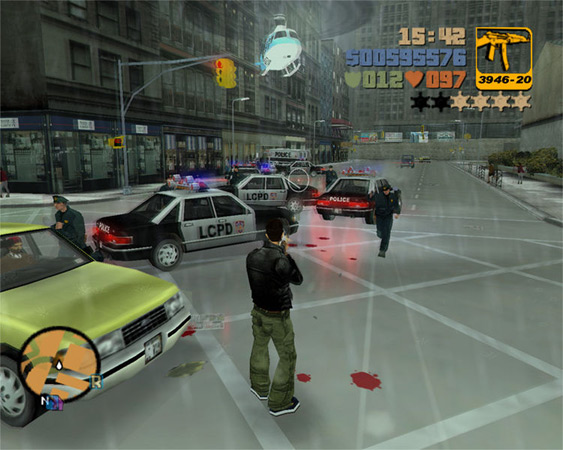
Our group had a couple main ideas before we decided on our final project. At first we wanted to show a story of a guy how gets sucked into a virtual world and he has to defeat a dragon or something of the sort. The only problem with that idea was that we learned that another group was using the dragon idea. So after some thought we decided we wanted to pretend that we were in a Grand Theft Auto game. Not only would we pretend to be in GTA we decided to have me play a female gamer who is playing as a man in GTA. We decided that we would have our main character (Ryan) would play mimic the things the normal GTA character would do. For example, hijack a car or rob a bank. From here we decided that Dyllan would be the car driver (who ends up killed by Ryan) and Marc would be a fleeing passenger of the car. Then have the final picture as my character leaving the game controller.
After our group decided what story we were going to tell, everything came together very nicely. I happened to have a nice camera, so we used that for our shooting. Our group got together during our regular class meeting time on Tuesday. We decided to do our GTA portion of the photo shoot in the daylight under the bridge by the Banta Bowl. We chose this location because it looked slightly sketchy. There was even some graffiti in that location but we ended up not using the pictures because they weren’t as good as we had hoped.
We then chose to take our “bank robbing” pictures outside of Chase. After those pictures were taken, we took the pictures with my character in Marc’s dorm later on that night. We decided it would be better in the dark to give it a different atmosphere rather than one similar to our “game”. After we chose which pictures to use for our final project I edited the GTA pictures to make them look similar to Grand Theft Auto 3 screen set up.

I had a friend help me create a crowbar icon for our photo because in GTA3, such an icon does not exist. We even made it so that the stars that appear in the game appeared in our pictures. Along with the stars, money also appears on a couple of occasions. Once when Ryan mugs Dyllan and the other when Ryan robs the bank. The time also changes as the story goes on.
            Our final project can be found HERE.

            I had a lot of fun working on this project with my group. I found that Flickr is easy enough to use after I got used to how the site worked. Our preparation for this project was simple. We set a time to meet and take pictures (during a meeting we held) and I brought my camera. When I had all of the pictures edited I found that Flickr was not that hard to use. It was pretty simple after I surfed the site for a little bit. Flickr makes it easy for users to share their photos with other people on the Internet. We tagged our photos as casual gaming and grand theft auto. The reason we chose these was because it basically described what was going on in the photos. In pictures where my character was playing video games, the tag read casual gaming. When the photos showed the GTA ones, the tags read grand theft auto. Tagging can be helpful because if you are looking for a certain topic or subject matter. You just type in what you are looking for and people who have tagged their pictures as such will appear in the search bar.
 

Saturday, October 8, 2011

Third Blog: Deviantart and Fanart


            In the book Free Culture the Nature and Future of Creativity, Lawrene Lessig talks about how in our society there are something that are free to copy while others are off limits. Lessig mentions how Disney rips off Brothers Grimm stories. Disney, however, puts their own spin on the stories. He goes to talk about doujinshis, which are spin off comics of Japanese manga. He goes on to explain what exactly a doujinshi is, “It is not doujinshi if it is just a copy; the artist must make a contribution to the art he copies, by transforming it either subtly or significantly” (Lessig). This may be strange to Americans because there is no way someone could create a knock off of Batman, publish and sell it for profit without getting sued. Yet the Japanese don’t ban doujinshi because while they use not original characters they have original story lines and sometimes their own art style.  
Deviantart is a very popular website that was launched in 2000. Their slogan is “where art meets application”. Here, many people post their own art they create. From traditional art (like drawing and painting), to digital art (like photo manipulated images or graphic design) to even artisan crafts and photography, you can find every form of art on this site. People can create an account and post their art. If viewer like your work they may favorite pieces or comment on them. Much of Deviantart however is made up of fan art. Yet no one bats an eye unless an artist claims that the content of their art was their original idea. To a blatant copy issue, users generally get together and report the art to get it removed from the site. You can also find multiple doujinshis on Deviantart. Each one is very different and generally creative in it’s own way. Even I have copied someone else’s style of art and have drawn fan art so that I could learn how to draw better. 
            It’s not just the small artists who benefit from copying and collaborating with other artists. Even some big named artists are on Deviantart. Lauren Faust and Bryan Lee O'Malley are two examples of people whose work you may have heard of work. Lauren Faust has worked on shows such as the Power Puff Girls, Foster’s Home for Imaginary Friends and most recently My Little Pony: Friendship is Magic. On the other hand Bryan Lee O'Malley was the man who created the Scott Pilgrim vs. The World comics, which ended up being turned into a movie staring Michael Cera in 2010. Faust is one of the artists who actually looks at what her fans create. She has even kept a mistake character named “Derpy Hooves” in the show because the fandom loved it and created mass amounts of fan art around it. 

            So not only can creating fan art help ones own art skills but it also can give artists new ideas so they can build on what they have already created. As long as artist do not blatantly copy other artists (take credit for their work) and give them credit where needed, collaboration should be allowed (and not considered piracy).  

Saturday, October 1, 2011

Extra Blog: Youtube


             YouTube has become one of the most recognizable Internet website in the past 5 or more years. “The website provided a very simple, integrated interface within which users could upload, publish and view streaming videos without high levels of technical knowledge” (How YouTube Matters). The first time I remember going on YouTube was to watch the SNL skit Lazy Sunday in 7th grade. YouTube has been a large part of my generation’s Internet life. You can upload and share multiple videos to friends and family. YouTube is a great example of how convergence in our current culture is helpful for business. Some users have the option of making money on their YouTube videos if their videos are popular. They do this by placing advertisements in the video (along the bottom) and on the side.
I even have my own YouTube accounts. The first was made in May 2007 and only has 5 videos. During all the years that account has been open for it only has gotten a total of 344 video views. Just earlier this year in February, since then I have uploaded 11 videos and gotten over 50,000 upload views and 136 subscribers. Just recently however I received the option set up my account so that I can earn money from my videos. According to YouTube if I set this up, “YouTube will place ads inside or near the video. You will earn a share of the revenue that is generated from ad impressions occurring when these videos are viewed” (YouTube). My other YouTube account and friend’s accounts have not received this message and cannot read the message when I send them the URL.
If you follow the guidelines that YouTube has set on what videos are eligible for you can make money on your videos. This is very attractive to many people. Who wouldn’t want to make money by making videos? Because YouTube does this they also get a lot more people creating new videos to upload everyday. Everyone wants to be the next big viral video. Look at Antoine Dodson who from that one news clip he got money from the auto-tuned song and he appeared on some television commercials. Or you could make big money by becoming someone like Shane Dawson or Smosh. YouTube is a great example of how convergence happens in our culture today.