Sunday, June 3, 2012

Interarts: Soundscape (Rewrite)


            Sound is something that surrounds us everyday. Whether it is a motorcycle revving its engine or a cardinal singing near your window, we never are away from sound. We use sound to communicate or to locate where we may be.  In the introduction to his book, Schafer tells us how important soundscapes are to us by explaining what soundscapes are. So what exactly is a soundscape? According to Schafer, “a soundscape consists of events heard not objects seen” (Schafer). A good example of a soundscape would be a forest or an ocean scene. 
Schafer also points out the three important elements to a soundscape; keynote sounds, signals and sound marks. Keynote sounds are sounds that are found naturally/normally in an environment but are usually regarded as background noise. Signals are almost the complete opposite of keynote sounds. Signals demand attention and are in the foreground of the element. An example of a signal would be a police siren. And lastly, sound marks “refers to a community sound which is unique or possesses qualities which make it specially regarded or noticed by the people in that community” (Schafer).
For our project “Anonymous Project” we tried to give our videos a more scary feeling. 
An important part of the horror music genre is using a mixture of silence (which would be the keynote sounds) and signals in order to set the scary mood. While we chose music that fit our video, we also tried to find music that contained sounds that caused your heart to race. A mixture between quick sharp beats and long, but loud sounds mixed in with silence really gives you the scary sound effect. Also the natural rustle of the leaves and the twigs snapping while Liz runs gives the video more of a realistic effect even though it is obviously fictitious.

Wednesday, May 9, 2012

Interarts: Copyright and Free Culture


            In Lawrene Lessig’s article, The Failures of Fair Use and the Future of Free Culture discusses the issue about law regulations in creative processes. In the first two sentences, Lessig lays out the reality of the matter, “"the law regulates creative process. It always has and always will”. (Lessig, 42) It does not matter how amazing your art is, if it is located on something that “shouldn’t” be turned into art or if you use (for example) sexually explicit material you may get in trouble. But out of all the regulations that have been created, copyright is the most well known and more recently has been used to stop artists from creating works using other known artists works. A good, modern example of this is “raised about DJ Danger Mouse’s Gery Album, created by mixing Jay-Z’s Black Album with the Beatles’ White Album.” (Lessig, 51) Lessig goes on to tell us that Jay-Z actually had no issue with the remix being made but the Beatles had an issue (the EMI even threatened to sue anyone who even so much as distributed the Grey Album). There are countless examples of artists being sued by large companies for using so much as a sound clip from a movie in a creative artwork. A long time ago, copyright only used to be in place until the creators death, then the work was released into creative commons. This issue of increased copyright is actually going to hurt our society and it’s creativity in the long run. Due of the recent increase of Internet use, copyright laws have been heavily enforced all over the country and for the majority of the time big companies win lawsuits because of how vague copyright issues are. If nothing is done soon, our countries creativity may be stifled.
            An example of a place that has realized the negative effects copyright has on the creative process is Japan. This is why the highly popular art form called doujinshi is allowed to thrive. Doujinshi is quite simply the Japanese word for self-published works (like novels or mangas). They are generally fan made mangas (the Japanese form of comic books) that usually use already created characters (like Naruto from Naruto or Luffy from One Piece). Doujinshi authors write entirely new stories or adventures for characters to go on. You would think that Japan would be upset over these mangas but they actually almost never are. Many real manga artists do not mind if fans make doujinshis because of a few main reasons. One being that these upcoming artists can get practice drawing in either a certain authors style until they find an art style that they like. And two, doujinshis helps new artists learn how to become good manga writers and once they get good will usually go to the publishing companies to create their own stories (which will bring in more money for the publishers). And three, doujinshis actually bring in more profit for the artist who originally created doujinshi characters because many times readers will go and read the original work. Unlike America, Japan has realized that it is beneficial to let some copyright regulations go unenforced for the betterment of their societies creativity and business.
            The United States should realize that enforcing copyright all of the time often stifles creativity. When you think about it, our culture was brought up on the borrowing and use of other people’s ideas (which is what many people would call “piracy”). Steve Jobs and Bill Gates both took different people’s ideas (none of which were credited) during the creating of both Apple and Microsoft computers. Even childhood favorite movies, like basically any Disney movie, would never have been made if piracy and copy right laws were in place because Disney would not have been allowed to put his own twist on a classic Grimm or common story tale. As long as artists are not taking other artist’s work, claiming it as their own and making money off of it (like if someone traced a famous drawing and sold it off as their own original creation) they should be allowed to used other, existing sources to either get new ideas or perspectives or inspiration. For example, there are many artists who take music and noise clips from My Little Pony: Friendship is Magic to create cool songs. Most of these artists make no money off of any of their music because they allow free downloads rather than forcing listeners to pay for the track. If Hasbro wanted to, they could go after these brony musicians and sue them for using sound or song clips from their shows. Yet, they choose not too because, like in Japan, Hasbro does not mind people using their products in art as long as money isn’t being made off of it or the artist is claiming 100% ownership of the music.

It is up to the artists and society itself to fight for the change of these laws. Lawrence Lessig puts it best when he says; "we have entered an age in which the right of artists to create freely must again be won". (Lessig, 53) If no one puts up a fight, then slowly our societies creativity will crumble. 

Tuesday, May 1, 2012

Interarts: Transmedia Storytelling


           This week we read weblogs from Henry Jenkins. Henry Jenkins is a well renowned media scholar who has written multiple books about new media. The most relevant readings we read by Jenkins were about convergence culture and transmedia storytelling. But what exactly is transmedia story telling? “Transmedia storytelling represents a process where integral elements of a fiction get dispersed systematically across multiple delivery channels for the purpose of creating a unified and coordinated entertainment experience” (Jenkins). This means that in a transmedia story, the plot or story line makes its own unique contribution to a story. Jenkins uses the Matrix as an example of a transmedia story. The Matrix is a franchise that contains three movies, one animated series, two comic books and a couple of games. The unique idea about these movies though is the fact that they all relate to one another. You have to play, read or watch the entire Matrix in order to piece together the entire story. One character may be introduced in the animated series that later appears in the movie. The most important thing about the Matrix, Jenkins says, is, “There is no one single source or ur-text where one can turn to gain all of the information needed to comprehend the Matrix universe” (Jenkins). This is the basic idea of transmedia story telling. 
           On his blog, Jenkins mentions a few key points that are important to a good transmedia story. For example, a good transmedia story is dispersed across different channels. This means that when a story should be told a certain way (whether that be with pictures, video or text) will hold more value if told in that said way. A good transmedia story should be synergistic. Having synergy in a story makes sure that the story makes sense as a whole and that issues (such as a characters past) are not changed from platform to platform. Jenkins also notes that fictional worlds should have a complex and interesting idea behind them. Characters must also be interesting and the story can be complicated when new characters are introduced or different ideas or viewpoints are shared. According to Jenkins, the fans also play a large role in transmedia storytelling. A good transmedia story should also contain gaps or potholes that fans can fill in or make up themselves in order to keep the fandom alive. 
Jenkins also tells readers multiple important transmedia story telling principles. The main principles mentioned are, spreadability/durability, continuity/multiplicity, immersion/extractability, worldbuilding, and subjectivity. Spreadability is the capacity of the public or fandom to circulate the media content through multiple different social networks in order to gain support. Drillability is when fans must dig deeper into a story in order to understand it better. Continuity in a transmedia story is also very important because it allows fans to take pleasure from gaining a greater understanding of the content. Multiplicity is when stories are retold to appeal to older fans. Subjectivity can be used in order to show lesser or secondary characters ideas through an outside source such as a character blog. Immersion and extractability are also quite easy to understand. In immersion, the fan enters the story world and in extractability, the fan takes part of the story and uses it in every day life. Worldbuilding uses the ideas of immersion and extractability push fans to treat the story world as a real space rather than a fictional wonderland. And finally, performance. Performance is important to a fandom because it allows communities to be created based around one thing, that media source. When new episodes or chapters are released, there are often people to interpret or discuss new fandom happenings. They help other fans understand issues like arcs, character development or story lines better.
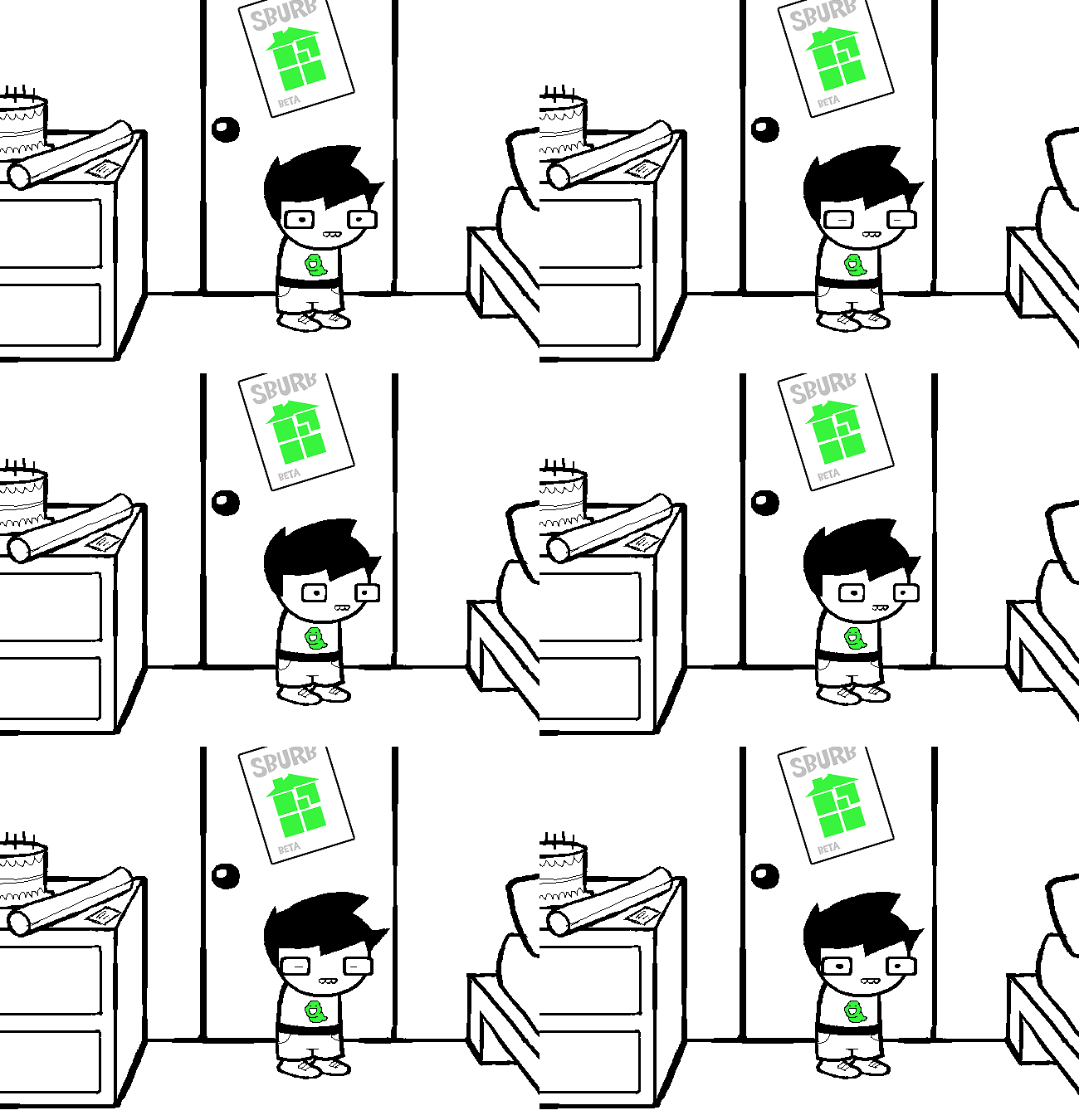
           Homestuck is a fairly good example of a story that uses these ideas Jenkins brings up. Homestuck is a webcomic that was started in 2009 by Andrew Hussie. It is a comic about a boy named John who plays video games with his friends and is tossed into a world of chaos where John and his friends meet multiple interesting characters along the way (worldbuilding). It is quite confusing and plots and themes often show up multiple times in the comic, almost everything has a meaning. Homestuck is told by a mixture of text, chat logs, pictures, flash animations, music and interactive play. Not only this but Hussie likes to throw in pop culture references and sections of older comics he has created within Homestuck. The fandom itself is a very lively bunch of people. There are multiple large Homestuck fan communities both in real life and on the Internet (spreadability). Multiple websites exist to help those who need events explained or theories discussed. There are even people who translate different dialects used in the comic (performance). There is also a vast majority of fan fiction and fan art that is created that helps gain outsiders interest (extractability). 
           There are many, many other fandoms that use these ideas Jenkins writes about. Shows like Supernatural, Sherlock and Dr.Who all share some aspects of transmedia story telling. (Here is an example of a popular piece of fan art that actually combines all three shows mentioned above) 

Sunday, April 22, 2012

Blog Four: Digital Photography


            During this week’s Interarts class, we learned about photography. Two photography professors gave us a presentation about the history of photography and why photography is important for showing many aspects that may go unnoticed in life. They also discussed the importance of visuals in presentations and/or in web building. Both teachers talked fondly of both film photography and digital photography and informed us the differences between each.
            Yet after doing a reading for class, I learned that some people do not consider digital art to be a valid art medium for multiple reasons including the fact that there is no film and therefore is not “physical”. Mary Ann Doane, author of Indexicality and the Concept of Medium Specificity from The Meaning of Photography, is a big supporter of this view. She thinks this because; “the digital seems to move beyond previous media by incorporating them all and by proffering the vision (or nightmare) of a medium without materiality, of pure abstraction incarnated as a series of zeroes and ones, sheer presence and absence, the code.” (Doane, 9) So according to Doane, because the photos may be digitalized at some point or another, they cannot be considered a “real” medium. Even though the digital photos still capture a moment in time and may hold emotional meaning, Doane still does not consider it an art medium. Doane says that because you cannot touch a digital photograph means it isn’t a real medium, "the index makes that claim by virtue of its privileging of contact, of touch, of a physical connection." (Doane, 9) and because you “cannot touch” digital photography means, "the digital can make no such claim and, in fact, is defined as its negation." (Doane, 9) But just because a digital photograph may be just numbers at some point make it an invalid art medium?
            When it boils down to it, the argument that Mary Ann Doane makes is completely misconstrued. Just because digital photography may be code in some point does not mean they cannot be a real art medium. Digital photos actually do take up space. They use bytes and are stored in a memory stick or on the computer. One can hold a memory stick in your hand and therefore could hold the data in your hand. Digital photos can also be printed off of a computer and can make a “physical connection”.  One could argue that even an artists creation at some point or another is just a thought. So, in the end, Doane’s argument is both illogical and pointless because she ignores multiple factors in what makes art, art.

Sunday, April 15, 2012

Run Lola Run


Recently in our Interarts class, we have been doing many readings from Timothy Garrand’s book Writing for Multimedia and the Web, which touches on the many elements writers should focus on while writing for interactive multimedia narratives. The focal points, according to Garrand, are, “the role of the player development, character development, structure, exposition, plot points, scenes, pace and time, and dialogue and other sound” (281). Many video game creators, including those of Mass Effect and Heavy Rain, effectively apply these ideas in the plot line, characters and story construction. When an author is able to effectively use and combine all of these elements while creating an interactive story, their narrative will be much more successful.
The movie, Run Lola Run, is a great example of a film that displays an effective interactive narrative rather than the traditional “linear” plot line. Even though the viewer cannot choose what Lola does in the movie, the director makes cinematic choices that allow the film to mimic an interactive narrative. In the movie, Lola goes through three different “runs.” Each interaction she has with different characters throughout the film effects the outcome of each run. For example, when the punk’s dog bites Lola during her second run, she cannot run as fast. This causes her boyfriend, Manni, to be struck down by an ambulance in the end of the run. In each run, Lola learns which decisions have the better outcome from her prior mistakes, just like a person playing a video game. Even the beginning of the movie sets viewers up for an atmosphere similar to that of a video game, including how the characters are introduced and the animated sequence. 
In an excerpt from Writing for Multimedia and the Web, Lena Maria Pousette, a writer for Voyeur, indentifies three key questions a writer must answer while creating characters for their narrative, “What is the [game’s] objective? Who is the player? And what does the player get to do” (282). Run Lola Run successfully answers all of these in a clear manner. Lola is the player of the “game,” and her objective is to obtain money for Manni to pay debts to his boss, while keeping them both alive. This is why she has three different runs, Lola is not able to achieve her end objective in her first two attempts, so she kept “playing” until she reached her end goal. Also, just like an interactive narrative, each interaction Lola has with another character results in a new path.  This is best illustrated in the quick flash-forwards of the characters’ futures following interaction like the biker, or the woman with the child’s lives. If it was drawn out, the structure of the movie would most likely resemble one of the flow charts Garrand uses as an example in his book.
While Run Lola Run technically is not by definition an interactive narrative, it is a very good example of how a movie could closely achieve this type of narrative. 

Sunday, April 8, 2012

Interarts Blog Two: Citizen Kane


            Citizen Kane is often considered one of the renowned movies of all time. At first I was quite skeptical of this claim. I had never seen the movie, but I had heard a lot about it from many people. When I read the synopsis of the movie, I was not impressed. It honestly seemed very dry and boring, which is not the type of movie that should be revered amongst other films. At first when I watched the movie, it seemed like my expectations of Citizen Kane were coming true, just as I had predicated. The movie was long, and I found the plot boring rather quickly. It wasn’t until our class discussion that I realized the movie’s merit; Citizen Kane is actually amazingly well done. The more we discussed the details of the narrative development, the more the film drew me in. Together, my classmates and I brought up multiple interesting plot points, camera angles, metaphors, scene set ups/dynamics and engaging character roles that brought to light Orson Wells’ cinematic creativity.
Wells has mastered many cinematic tools, which is reflected throughout Citizen Kane. He effectively uses a journalistic approach to tellthe story of Charles Kane. Wells also is able to convey many symbols and metaphors subtly throughout the film that can be easily overlooked by many viewers. Citizen Kane effectively conveys many of the points that Timothy Garrand (author of Writing for Multimedia and the Web) claims are important for a successful script for a movie. Garrand says a scriptwriter should focus on about seven points, “Showing, not telling…Structure…Interactivity and chunking…Setup…Characterization…Conflict…and Cost” (35-36). Wells most effectively uses the “showing, not telling” technique in Citizen Kane. There are two scenes in particular that effectively use these elements; each helps make the film deeper.     
            The first scene was the one that occurred in the snow during Kane’s childhood. In this scene, Mr. Thatcher and Kane’s parents discuss Kane’s future while he plays in the snow. There are many cinematic elements that are being used in this scene to give the viewer a deeper insight into Kane’s childhood and foreshadow later events in his life. This scene in particular follows Garrands’ movie script tips. One cinematic element used is the body positioning of the characters. The fact that Kane’s mother is depicted standing in front of the father shows that she is the more authoritative figure the family in that time. Also, by depicting young Kane playing in the snow not only shows Kane’s innocence before he is thrown into the adult world but also the loneliness he will sufferer through for the rest of his life. Kane is literally framed in the window as he plays in the snow, which represents the life that he will soon be trapped within. This idea of being trapped is a theme that follows Charles throughout the rest of his time in the film.
The second important scene was where Kane speaks his last words. This scene was one of the most important scenes for the symbolic portion of the film. There is only one word uttered throughout the whole scene, “Rosebud”. Kane is holding a snow globe that has a miniature snow-covered house within the glass orb. You find out later in the film, “Rosebud” was actually a sled. Both Rosebud and the snow globe relate back to the scene mentioned above when Kane was child playing in the snow. Charles was remembering a time before his life became a lonely and cold place.
The traits of a good movie (as told by Timothy Garrand) are obviously used and very effective in Citizen Kane. If Orson Wells had decided not to use and of these cinematic techniques, the film may not have popular or renowned as it is in today’s society. 

Sunday, March 11, 2012

To Fur, or not to Fur: Second Life Bronies

 Recently, the television series My Little Pony: Friendship is Magic (MLP:FiM) has gained considerable popularity in the United States. A Brony (or its female counterpart: a pegasister) is a viewer or fan of this television series. Since the show’s release, there has been an increase in the population of Bronies in Second Life. Multiple sims like BronyTown, EverFree Forest and Trotsdale have been a hot spot for thousands of these SL Bronies.

Many Bronies choose to use pony avatars while in these sims. These players typically are avid MLP:FiM role-players. You can even see some players that have “mane” pony cast avatars running around the sim. It is largely in part due to this, that so many Bronies have been receiving hate from supporters of the anti-furry community.

Because many people are not big fans of the Furry community and because of this, rumors often spread throughout the grid like wildfire. Recently, many anti-furry advocates have been accusing the Furries of using the Brony community as a ploy to gain support. Upon hearing this, I was led to question the accuracy of this insinuation and began to wonder how much the Furry and Brony communities overlap in SL.

Firstly, I consider myself to be a Brony and would personally disagree with the anti-furry accusations. However, I am relatively new to the SL community, so I am not yet familiar with the popular opinions of many SL users.

Deciding to investigate this issue, I traveled to Bronytown and the EverFree Forest in my Pegasus pony avatar. BronyTown is one of the largest role-playing Brony communities in SL, while the EverFree Forest is one of the biggest pony sims. Once there, I was sure that I could find a few Bronies who would be more knowledgeable than me on SL Brony politics. Thus, I began to interview several random Bronies to obtain some insight.

SydVicious11: Do you think that there is an overlap between the furry and brony communities?
Pegasus Colt: I do not speak for all of either comunity, but my personal experiences there seems to be
Pegasus Colt: at least on S:
Pegasus Colt: SL*

EverFree Forest Pegasister: Somewhat. I mean, I'm sort of a furry. And I've seen other furries running around here aswell

SydVicious11: Do you think there is much of an overlap between the furry and brony communities?
BronyTown Rarity: There is a HUGE overlap. Almost every pony I meet here is a fur.

Brony Role-Player: personally to me there isn't really much over lap brony is brony and furry is furry

Shukie Galicia: the brony and furry fandoms do overlap abit. i myself am a furry for the past 8 years, and a brony for the past year or so.

It appears that to the knowledge of most SL Bronies, there is a relatively large overlap between the Brony and Furry community, yet that does not seem to bother many of them.

SydVicious11: Do you think this is a source of conflict within the brony community?
BronyTown Rarity: Not that I've seen. People, whether furs or not, tend to leave their other interests out in the Pony sims. Especially as the sim is PG.

One Brony who I interviewed explains the situation the best.

Earth Filly: There's overlap, but only among certain people. It depends on the individual, not the whole community.

Furthermore, when I interviewed a role-player from BronyTown about the Brony/Furry overlap she simply replied.

Brony Role-Player: does it matter if it does?

Thus there is a clear overlap between the two communities. Yet, when I asked if they thought that if the Brony community was a ploy by the Furries to gain supporters, many scoffed at the anti-furry accusation.

SydVicious11: many people who are anti-furry think that bronies are just a fur ploy in order to get more support
SydVicious11: do you think that is true?
EverFree Forest Pegasister: No. Some people who are bronies are also furries, but they are two completely different fandoms

One girl made a logical comparison between the relationship of Bronies and Furry fans to that of anime fans and Furry fans.

Shukie Galicia: the same way the anime fans overlap with furry fans and so on. like furrys go to anime cons

I even had a discussion with the owner of the EverFree Forest sim, zedmastermind, who agreed that there are some Furries that are Bronies in SL. He also thought the accusation by anti-furs was ridiculous.

While I do not have exact numbers and statistics, the general consensus is that there is a definite overlap between the Furry and Brony communities in SL. However, that does not imply that Bronies are Furries are mutually exclusive.

Shukie Galicia: many non-furs picked up on MLP. i personally am female so i'm just kinda into ponys because its adorable and makes me laugh :33 and the toys look cute on my desk xD

It seems that many SL Bronies enjoy My Little Pony: Friendship is Magic for the show and community rather than for the alignment with the Furry community. Furry or not, the SL Bronies are brought together by their love for the show, and most don’t care where your interests lie outside of that.

Maybe the anti-furry community needs to get past the Brony stereotype and take a lesson from the show. To quote Twilight Sparkle in her letter to Princess Celestia in the end of the episode Bridle Gossip:

Dear Princess Celestia,

My friends and I all learned an important lesson this week: Never judge a book by its cover. Someone may look unusual, or funny, or scary. But you have to look past that and learn who they are inside. Real friends don't care what your "cover" is; It's the contents of a pony that count. And a good friend, like a good book, is something that will last forever.

Your faithful student,
Twilight Sparkle.

Friday, March 9, 2012

Extra Blog: My Second Life Experience

            One of the MMORPGs (massively multiplayer online role playing game) that we spent a lot of time in during our Intro to Virtual Worlds class was Second Life. Second Life is an online virtual world that was created by Linden Lab in 2003. In Second Life, players can interact with other users by using custom avatars. Not only can they be social, but they can also explore the world (also known as the “grid”) and have the ability to build almost anything. You also have the option to make real world money by trading in Linen Dollars you gain in game. I actually had played Second Life one time before this class back in 2007.
            The only issue with playing back in 2007 is that I had not played since. So I basically had to learn how to do most basic tasks over again. I was skeptical when our class first played during class because my last experience had not been something to write home about. After playing in world for about an hour in class, I still was not quite convinced that Second Life was all that great. It didn’t help that all the other times I attempted to play on my laptop the game glitched and would not load objects or avatars correctly. At that point, I was nowhere near excited to do really anything related to Second Life.
             A few weeks after our first Second Life introduction, our class was assigned our final blogging assignment. Our task was to write an article based on a given topic that we were to investigate in Second Life using in game participants as informants. Once again, I was slightly skeptical about how much I would learn from this experience but I still tried to be positive about working in Second Life. Our class was going to be writing for a real online newspaper called Alphaville Herald. One of the editors, Pixeleen Mistral, would be giving us our article assignments after we sent her an email. Our professor listed off some possible article topics and one stuck out to me, Bronies. A Brony is a name given to (a usually male) fan/viewer of the new television show, My Little Pony: Friendship is Magic. I myself am a Brony and knew that this was the topic for me. As soon as class was out, I sent Pix an email asking for an article about the Second Life Bronies. Pix granted my request and gave me a Brony themed article topic. She also gave me a few different ideas of what I could focus my article on, for example Brony politics, Brony businesses or the overlap between Bronies and Furries. I decided it would be the most interesting to go with the third article option.
            Now that I had my article assignment I had to go in world and interview some of the Second Life Bronies. My only issue at this point was making time to log onto Second Life to actually conduct the interviews was slightly difficult. My laptop still did not like the Second Life viewer that I installed. Not only that, but I had to work around the time that the campus computer lab was available for use. Once I finally was able to get into the lab, my Second Life journalist adventure really started to bloom. 
            My first stop was BronyTown. As I found during my travels of the Second Life world, BronyTown is one of the larger and more popular Brony communities. I entered the world in my started German shepherd avatar and began to wander around the sim. I found some ponies and I asked them if they would allow me to ask them a few questions for an article that I was writing. One pony (who was wearing a Rarity avatar) was very nice and answered all of my questions. Another pony was more wary of my intentions, but he stubbornly gave me some answers. For the most part, the ponies I ran into just were role-playing and didn’t take the time to talk. After a slightly disappointing Second Life adventure I had to leave the computer lab at closing time.
            I was back in the computer lab as soon it opened again. This time, instead of going right back to finding ponies to interview, I decided to check out the rest of the sim. While flying above the trees of the EverFree Forest, I had the idea to change my dog avatar into a pony one. I figured people would be more likely to talk to me if I looked like them. I ended up running into a random Brony, who was able to help me create my very own pony avatar (that was dark gray with a blue mane and tail). Donning my new avatar, I went back on the prowl for new Bronies to interview. Yet this time I was very unsuccessful this time around. I got a few words from a couple Bronies but no one would stay to chat. For the most part they kept role-playing or just didn’t respond. Slightly irritated with the lack of willing Bronies, I decided that I needed to take a break and do something else until more Bronies showed up in the sim. I explored almost all of what I think was the entirety of the Brony sim, I had the idea to visit Nope.
Nope is a sim in Second Life that our class was told about by our professor when we were learning about griefers. Griefers are people that can be found in almost any MMO, and who enjoy irritating and harassing other players for fun. In Second Life there is always a place where people who affiliate themselves with or are griefers’ home base. Our class had been granted access to Nope by one of the well-known “griefers” in Second Life, yet no one had bothered to venture there. I didn’t have any thing better to do at the time so I decided to check it out for myself.
I arrived in Nope and the first thing I noticed was how random and slightly chaotic it was. There were random meme references scattered about the land, which I found quite amusing. I wandered about in my pony avatar when suddenly I was surrounded by a very random assortment of people. I was a newcomer in an invite only sim so they were all slightly confused. Many of them began to ask me questions like how did I know about Nope? Was I apart of the JLU? Who invited me? Was I lost? I put on my headset and attempted to explain myself as they bombarded me with questions. I tried to answer their questions as best as I could. I told them about the class I was taking. How I knew about them. I explained that I was not a JLU member. I then told them about the article I was writing and my lack of Bronies willing to participate in my interview. Instead of messing with me like I had expected them to, they actually were interested in what I was telling them. Some thought it was funny that my professor was writing a book about griefers and some wanted to know what it was called so they could check it out when it was finished. After I told the group about my article, a few of them decided to help me. A couple Bronies happened to be in the group, so they told me what they thought about the relationship between the Second Life Bronies and Furries. One went as far as to get in contact with the owner of the EverFree Forest, which is one if not the biggest pony sims in Second Life. That griefer accompanied me in going to meet up with zedmastermind (the owner of the sim). I learned a lot about the Second Life Bronies and about some of their different groups and even some stuff about Second Life itself from talking to Zed and the griefer. The three of us talked about many random things like Woodbury and what we thought of the JLU. They even gave me helpful advice about where to download a better viewer for Second Life so it will actually work on my computer. Our chat was cut short when security was closing up the computer lab. I thanked Zed and the griefer for all of their help and logged off.
In the end, I actually really enjoyed my experience in Second Life. After I fix my game viewer (so I will hopefully be able to play it on my computer) I will probably continue to play it every now and then. I loved how helpful many of the players were and they would take time to explain things to me even though I was new to the game. Even the griefers that I met were both funny and enjoyable people. I was able to learn a lot about Second Life from people who actually witnessed many of the events that we had previously discussed in class. I am glad that I kept an open mind about Second Life because the experience that I had was not only enjoyable but I was able to learn more about Second Life and the people who play it more than I thought I ever would.

Virtual Worlds: Blog Three REWRITE


            During class this week, our main topic of discussion was the laws and jurisdiction of the Internet and how it is difficult to actually govern and have set laws. One reading in particular stuck out more to me. Written by David Johnson and David Post, Laws and Borders: the Rise of Law in Cyberspace touched on many subjects that are quite relevant to today. They mainly touch on subject of the “new rules [that] will emerge, in a variety of online spaces, to govern a wide range of new phenomena that have no clear parallel in the non-virtual world.” Basically, cyberspace is an entirely new place that cannot abide by all of the rules of every country or nation that uses the Internet. Post and Johnson claim that these new rules “will play the role of law by defining legal personhood and property, resolving disputes, and crystallizing a collective conversation about core values.” They claim that cyberspace should be considered to be it’s own place and therefore should have it’s own rules.
            I cannot really think of many examples that I ran into/experienced while playing LOTRO that would be considered relevant to our readings. I have not run into players breaking rules, exploiting or attempting to use cheats. I didn’t even run into any trolls while playing the game. This may be because I have not reached a highly populated part of the game quite yet. But there is an issue that is relevant both to our readings and to some current events. These “current events” would be the attempt made by the House of Representatives and the Senate to pass both the SOPA and PIPA bills. They were created in an attempt to “eliminate” copyright infringement on the Internet. In short, SOPA (aka Stop Online Piracy Act) allows companies to remove websites if they contain anything that is copyrighted or hyperlinked to copyrighted material. PIPA (aka Protect Intellectual Property Act) is very similar to SOPA, but it deals with foreign websites and attempts to stop them from hosting things like television shows, movies or anything else that would be considered copyrighted material. If these bills were to pass and eventually become laws, many websites would be shut down. Not only would websites be affected, but also many companies would most likely be destroyed in the process.
            The House of Representatives and the Senate honestly has no business meddling in laws and matters that deal with the Internet. There are multiple, logical reasons why they have no business in dealing with anything Internet related. Some of these reasons include but are not limited to the basic fact that the House of Representatives and the Senate are in no way experts on the Internet and do not know how or why it works the way it does. Both Johnson and Post would agree with me on this topic. Because the United States government attempted to treat the Internet as a something under its jurisdiction rather than a new place, their actions went the exact opposite direction of what Johnson and Post were trying to promote. Johnson and Post explain that “Internet has created jurisdictional problems” due to its lack of boundaries. This supports the idea that the Internet should be considered it’s own place. Too many problems arise when multiple different governments (including both state and country) have different ideas about how the Internet should be run. No two governments would have the same ideas and standards. Like Johnson and Post said, it would be much easier to consider cyberspaces its own, separate jurisdiction. Because PIPA and SOPA are an attempt to regulate the Internet, Johnson and Post would never support either bill.
             Many things could (and more than likely would) go wrong if the government was allowed to interfere with creating and enforcing Internet law. Recently, a “blackout” was held Wednesday, January 18th, in protest of both SOPA and PIPA. Sites such as Reddit and Wikipedia (along with multiple other websites) went dark for 24 hours. For one day, many Americans struggled to complete many simple tasks that only took seconds to complete the day before. The blackout attempted to mimic what the Internet would be like if SOPA and PIPA were passed. This is why the House of Representatives and the Senate needs to become more educated on both the Internet and how cyberspace should be considered a new place. And because it would be a new place, laws created in cyberspace should be treated as valid and the United States government should respect cyberspaces jurisdictional authority.  

Virtual Worlds: Blog One REWRITE


In his book Designing Virtual Worlds, Richard Bartel defines virtual worlds as a world “implemented by a computer (or network of computers) that simulates an environment.” These games are often referred to as “multi-user,” meaning all game users share and play together in the same “world.” Starting off as simple MUDs (multi-user dungeons), virtual worlds have grown and expanded immensely throughout the years. Games such as World of Warcraft, Habbo Hotel, Lord of the Rings Online, Club Penguin, and Eve Online are all examples of how virtual worlds have grown and expanded in today’s society.
The first project assigned to our Intro to Virtual Worlds class was to create a “toon” on Lord of the Rings Online. Lord of the Rings Online (LOTRO) is the first virtual world that we will be studying this term.  Together, our class will work together to gain a better understanding of how virtual worlds work. By actually playing the game, we will be able to better comprehend the materials learned in class and be able to apply what we have learned in-game to concepts or ideas our class goes over. Before you begin your LOTRO journey, you must create a toon or avatar for you to play as. You can create them to look a variety of different ways. Similar to many MMORPGs, in LOTRO, depending on what attributes you choose for your character will determine what their strengths, weaknesses and job in the virtual world will be.
The most important decisions you can make while creating your LOTRO avatar is made when choosing their race, class, and skills. I personally decided to play as a character from the man race. I liked the other races (and I knew I did not want to be a dwarf for sure) but I also knew that elves would probably be pretty popular. At first I wanted to make my character a Lore Master. A Lore Master is a class you can choose that has your character using magic to fight instead of weapons or other objects. According to the LOTRO Game Guide, "the Lore-master uses his knowledge of ancient wisdom to attack his foes or to ease the suffering of his companions” and “can even communicate with animals and request their aid, and also use his knowledge to daze, harm, and hinder his enemies." I knew it would be harder to do than be a hunter (which was my other option) but I thought it would be fun. Only the races of elves and men can be Lore Masters, which is why I ended up choosing to play as a man. I also changed my characters physical appearance to my liking, which was quite fun (due to the many options I had to choose from). This is what she first looked like.
 Yet when I first started playing, I realized that it was quite hard to play as a Lore Master. Lore Masters are under the "advanced" character. I decided to create a second character (who looks the same) and choose a "basic" level. After I figure out how to play the game a little better, I will go back and play as my Lore Master character. This time I chose to play as a Guardian. A Guardian is described as "the class of choice for players who enjoy hard- fought battles and heavy hand-to-hand combat” and “one of the few classes willing and able to draw blows onto himself, and can retaliate with devastating response.” A Guardian “uses taxing attacks and irksome taunts to draw and hold opponents’ attention, relying on his shield and weapon to turn aside incoming attacks with blocks and parries." I started playing, and so far I am on level 7, so it is going well. I still am not at the point where I know how to strategize my attacks or even know how to effectively fight as a tank. But that is a skill I hopefully will have learned (and maybe mastered) by the time we are done playing the game. This is what my guardian character “Saxith” looks like.
Now, according to Richard Bartel, there are four types of players in virtual worlds. He points out that by having a balance between all four types of characters, which will cause the game to run smoothly, “an account of the dynamics of player populations is given in terms of these dimensions, with particular attention to how to promote balance or equilibrium”. Bartel uses card suits to describe the four types of players found in virtual worlds. He describes hearts (the socialisers) as players who “are interested in people, and what they have to say.” So those who are socialisers participate in games like LOTRO to create friendships. Spades (the explorers) on the other hand are, “explorers [who] delight in having the game expose its internal machinations to them.” Often times, explorers will travel to the ends of the game, searching for bugs to tinker with and understand. Clubs (the killers), “get their kicks from imposing themselves on others.” Killers are often players who are also known as “griefers,” players who purposely irritate or harass fellow players for fun. Finally, diamonds (the achievers) are those who “regard points-gathering and rising in levels as their main goal, and all is ultimately subserviant to this.” This type of players’ main goal is to level up and gain or gather game points. It is the balance of these four types of characters that makes MMORPGs so successful because, when together, the types are balanced out. Bartel argues that if a game is heavy on one type of player, then the balance of the game could be lost. If a game lost a large amount of explorers it could, hypothetically, cause a gradual drop in achievers who are bored without anything new to try and the chain reaction would cause the rest of the types’ numbers to gradually decline. I personally think that I will mostly be in the diamond and spades group. This is because I enjoy the smaller tasks that lead up to my character leveling up and I like to explore the lands I have not yet visited.
Hopefully playing in the world of LOTRO will be a ton of fun. I have never actually played a real action MMORPG like LOTRO or World of Warcraft before, so I am excited and slightly nervous. I am also looking forward to learning more about the game itself (game play, character interactions, quests, etc) and virtual worlds that are similar to LOTRO as I learn how to successfully play the game.

Tuesday, February 28, 2012

Virtual Worlds: Blog Seven-The Secret Life of Gold Farmers

Rich Thurman looks like your average American citizen. He is thirty years old, has a wife, and two young children. Rich also has a solid job working as a software engineer. He even plays video games. Yet many people would not know that Rich secretly has been running a successful business from the seemingly pointless games he plays.
Rich used to play Ultima Online, a popular MMO. “I played it two years straight, right from the start of the game back in '97,” Rich jokingly says, “until my wife started complaining that the only way she could socialize with me was to play UO.” Yet after a friend sold his account for a thousand dollars, Rich got to thinking. He realized that people would pay real-world money for online commodities. Rich became the leader of EasyUO Cartel, a gold farming company.
What exactly is gold farming? Gold Farming is the real-world sale of virtual goods and services produced in online games. Gold farming is a controversial subject in virtual worlds because many players feel as though it is cheating to buy from a gold farmer. Some games even ban gold farming or control bots/macroing, which is when characters are controlled by a code that makes them do repetitive tasks to gather items that can be sold or traded for in-game currency. There are three main things that gold farmers do, sell in-game currency, power-leveling and selling in-game items. In Rich’s case, he was more into selling in-game currency. Yet there is no way that Rich could make enough gold to profit on alone. Using his coding skills, Rich was able to control multiple bots. Yet gold farming is not as simple as just setting up a bot, in most virtual worlds players who bot get their accounts banned. Game moderators will ask players suspected of being a bot are asked questions that only a real user could answer (like the color of something). So Rich had to set up a system that allowed him to be notified when a macro was being questioned by a GM (game moderator) so he would be able to answer.
            Yet Rich is not the only one with a gold farming business. Lee Cadwell is another big gold farmer in the Ultima Online community. He is the owner of Blacksnow and Ingotdude, the Cartels biggest competition when it comes to gold farming. Lee and Rich were brought together by a common foe. Both men were ripped off when they tried to purchase gold from the same Ebay seller. Lee showed interest in merging Blacksnow and the Cartel and the two exchanged conversations about going through with it.
After many long discussions, it seemed that both Rich and Lee had reached the agreement that they would join forces to become the leading power in Ultima Online gold farming. When suddenly, some of their accounts were banned. Lee became accusatory of Rich, claiming that he must have something to do with the account bans. When Rich attempted to calm Lee down, claiming that all of his accounts were also banned, but Lee lost it during an IM conversation with Rich.
[Lee goes by the name “Destiny” while in chats]
"Destiny: ok either you are lying to me about who has exevents, you are lying to me about what you guys are doing with it or there is something out there that can do the exact same thing. on eof those three are the possible answers and i am beginning to feel like i am being played and when it comes to my rent and my food being paid for i dont like to be played.”
“Destiny: no you motherfuckers are in for it, its fucking on."
Ever since that IM chat, Lee has sworn to get back at Rich. Rich tells us, "Lee is putting too much heat on me right now. Every bot I try to put in action, he finds it and gets it banned. I'm going to have to lay low for a while till things simmer down a little. And start looking for new bugs to work. With all this exposure going on, all the old ones are getting patched left and right by the designers. But it's always like this. Every time OSI goes in and fixes things, they pop a few stitches somewhere else. And you just gotta go and find them."
Will Lee and Rich ever settle their differences and work together like they had planned? Most likely not. So then what will happen with this war? Will the Cartel find a new bug that will allow them to enter the system unnoticed? Only time will tell and we will keep you updated as these events unfold.

Sunday, February 19, 2012

Virtual Worlds: Blog Six-Pool's Closed

        Our virtual world class, we read an article called And the Ringleaders Were Banned: An Examination of Protest in Virtual Worlds by Bridget Blodgett. We focused on protests that have happened within virtual worlds. Ultima Online, World of Warcraft, Second Life, Eve Online and even Habbo Hotel are just a few virtual worlds that have experienced large in-world protests. In her article, Blodgett discusses how protests change when they are moved into a virtual space. Blodgett uses a model to analyze how technology and virtual worlds causes different protest methods to be necessary. In her model Blodgett explains the four concepts that make up the model: the degree of virtualization, legality, cultural homogeneity and limitations of participation. The degree of virtualization is “a simple percentage of the amount of organization and participation that was achieved offline or virtually”. This is a pretty simple point. Next, legality is “a measurement of how legal the actions of the protests were both in planning a protest and holding it”. Often, protests that bridge the online/offline gap break the law, while purely online protests do not. The third point is cultural homogeneity. Cultural homogeneity is “a measure of how more similar individuals within the protest are to each other in regards to their cultural views and identity”. And the final point is the limitations on participation. The limitation on participation is “a measure of if and how individuals are prevented from participation in the protest”. These are all unique parts of the different aspects of a virtual protest that are often needed for the protest to have that framework.
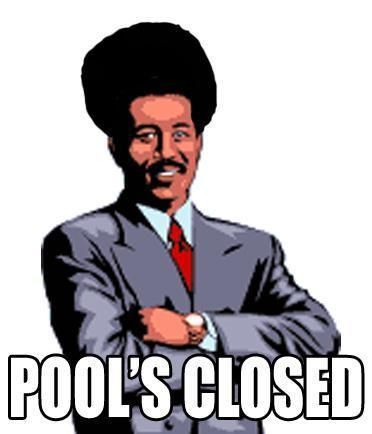
One of the more interesting/amusing protests that occurred were the Habbo Hotel raids. Every single year since 2006 on July 12th, hundreds of black avatars donning afros and gray suits flood Habbo. This all began on the /b/ thread of 4chan back in 2005. Some /b/tards heard a rumor that some of the Habbo moderators were racist and banning black skinned avatars without reason. To protest, the group went in-world with avatars wearing gray suits and afros. They would block the entrances of the pools and claim that “Pools closed” to all those who entered. It was one of the biggest raids of its time.
            What does this protest have to do with Blodgett’s virtual protest model? All of the protesters participated online. There are a couple instances of people dressing as the black avatar symbol at conventions but other than that it has no real life influences. I do not believe that this protest continued outside of 4chan and Habbo. Also this raid was completely legal. There are no laws in the Habbo EULA that ban avatars to wear a gray suit and afro. Also the fact that the game did not allow players to walk through each other was a design flaw (which was later changed). As far as cultural homogeneity goes, protesters were from all backgrounds. On the final note concerning limitations on participation, I do not think that individuals were prevented from protesting. This protest meets all of the parameters to fit into Blodgett’s model for online protests.

Sunday, February 12, 2012

Virtual Worlds: Blog Five-User Created Content


            After playing Lord of the Rings online for a few weeks, our class moved onto a new game called Second Life. Second Life is a cool game where you can create almost anything out of basic shapes and actually make real world money off of your creations. Our first official Second Life reading was Escaping the Gilded Cage: User-Created Content and Building the Metaverse by Cory Ondrejka.Ondrejka talks about the importance of user created content for virtual worlds. He claims that by having more user created content in world, we are moving closer to a metaverse (which is basically a place where people can effectively connect and be productive). Many games have come close to this metaverse but no one has been able to achieve it yet. Ondrejka thinks that Second Life is the closest virtual world to being a metaverse due to the allowance of user created content in games. Because people can create rather than craft (crafting is not creating, rather just helping your player get achievements accomplished) in game, "this allows users to create iteratively and interactively, while sharing the act of creation with other users" thus creating a closer community. Ondrejka says that because so many Second Life players contribute to creating their world it makes a strong and diverse social network.
            I have actually played Second Life before so this was not my first time building objects in game. So when we played in class it was a refresher for me. But even though I had played before it took me a bit of playing around to figure out how to create shapes properly (along with doing tasks like coloring, texturing and connecting shapes). It is a lot of fun to create things in Second Life.
I actually ended up creating a small doghouse-like structure as my object. I chose to create a doghouse because my avatar at the time was a German Sheppard so I thought that it would be funny to create a house for him.
For the creation of the doghouse, I used the basic prism tools to create the house. I used the cube and cylinder tool to do most of my work. I created a base, and three back wall panels of the doghouse by stretching out the cube prim to make a floor and walls. I then used stretched cylinders to create columns for the front of the doghouse. I finally finished the house by placing a large pyramid shaped roof over the structure. As for textures, I just used the basic textures that came in my texture pack. I didn’t really feel the need to go out and buy new textures because the ones that I already had were fine for what I was building.
While some people get help building things, I did not end up collaborating with anyone on making my doghouse because I didn’t feel the need to. I was just building something for fun, nothing too big that I would need someone’s help with.
             I think that the user created content really does make Second Life different from most if not all of the games that I have played. Having all of creative creations in world really does make it a different experience. Creating houses, automobiles, and even clothing makes the in game experience awesome. Even though I did not have help creating my doghouse I am pretty sure that if I was creating something bigger, I could get the help I needed considering most of the people I met in-game were quite helpful. If I play Second Life more I feel as though Ondrejka’s argument would apply more than it does to me now.