This week we read weblogs from Henry Jenkins. Henry Jenkins is a well renowned media scholar who has written multiple books about new media. The most relevant readings we read by Jenkins were about convergence culture and transmedia storytelling. But what exactly is transmedia story telling? “Transmedia storytelling represents a process where integral elements of a fiction get dispersed systematically across multiple delivery channels for the purpose of creating a unified and coordinated entertainment experience” (Jenkins). This means that in a transmedia story, the plot or story line makes its own unique contribution to a story. Jenkins uses the Matrix as an example of a transmedia story. The Matrix is a franchise that contains three movies, one animated series, two comic books and a couple of games. The unique idea about these movies though is the fact that they all relate to one another. You have to play, read or watch the entire Matrix in order to piece together the entire story. One character may be introduced in the animated series that later appears in the movie. The most important thing about the Matrix, Jenkins says, is, “There is no one single source or ur-text where one can turn to gain all of the information needed to comprehend the Matrix universe” (Jenkins). This is the basic idea of transmedia story telling.

On his blog, Jenkins mentions a few key points that are important to a good transmedia story. For example, a good transmedia story is dispersed across different channels. This means that when a story should be told a certain way (whether that be with pictures, video or text) will hold more value if told in that said way. A good transmedia story should be synergistic. Having synergy in a story makes sure that the story makes sense as a whole and that issues (such as a characters past) are not changed from platform to platform. Jenkins also notes that fictional worlds should have a complex and interesting idea behind them. Characters must also be interesting and the story can be complicated when new characters are introduced or different ideas or viewpoints are shared. According to Jenkins, the fans also play a large role in transmedia storytelling. A good transmedia story should also contain gaps or potholes that fans can fill in or make up themselves in order to keep the fandom alive.
Jenkins also tells readers multiple important transmedia story telling principles. The main principles mentioned are, spreadability/durability, continuity/multiplicity, immersion/extractability, worldbuilding, and subjectivity. Spreadability is the capacity of the public or fandom to circulate the media content through multiple different social networks in order to gain support. Drillability is when fans must dig deeper into a story in order to understand it better. Continuity in a transmedia story is also very important because it allows fans to take pleasure from gaining a greater understanding of the content. Multiplicity is when stories are retold to appeal to older fans. Subjectivity can be used in order to show lesser or secondary characters ideas through an outside source such as a character blog. Immersion and extractability are also quite easy to understand. In immersion, the fan enters the story world and in extractability, the fan takes part of the story and uses it in every day life. Worldbuilding uses the ideas of immersion and extractability push fans to treat the story world as a real space rather than a fictional wonderland. And finally, performance. Performance is important to a fandom because it allows communities to be created based around one thing, that media source. When new episodes or chapters are released, there are often people to interpret or discuss new fandom happenings. They help other fans understand issues like arcs, character development or story lines better.
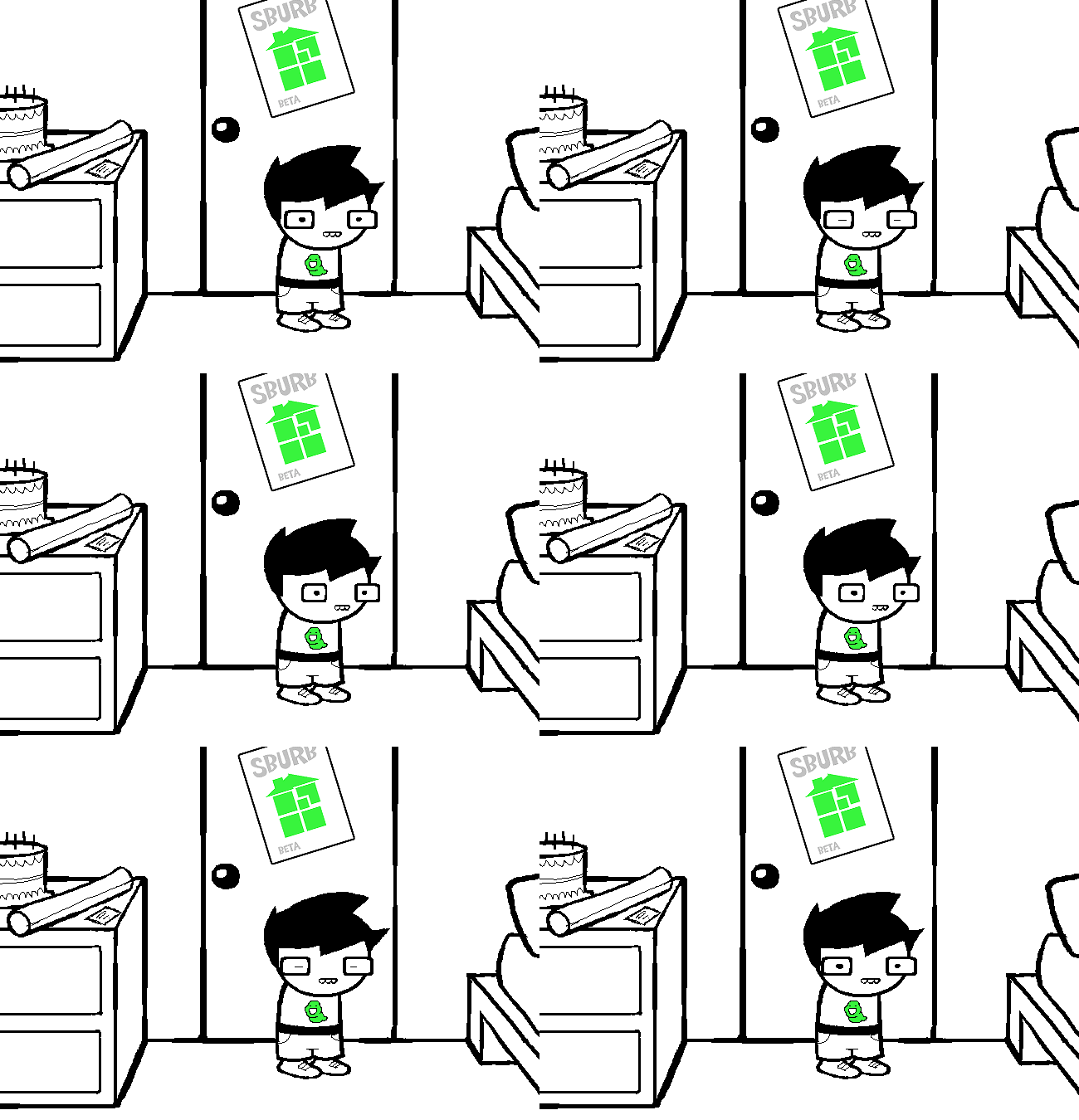
Homestuck is a fairly good example of a story that uses these ideas Jenkins brings up. Homestuck is a webcomic that was started in 2009 by Andrew Hussie. It is a comic about a boy named John who plays video games with his friends and is tossed into a world of chaos where John and his friends meet multiple interesting characters along the way (worldbuilding). It is quite confusing and plots and themes often show up multiple times in the comic, almost everything has a meaning. Homestuck is told by a mixture of text, chat logs, pictures, flash animations, music and interactive play. Not only this but Hussie likes to throw in pop culture references and sections of older comics he has created within Homestuck. The fandom itself is a very lively bunch of people. There are multiple large Homestuck fan communities both in real life and on the Internet (spreadability). Multiple websites exist to help those who need events explained or theories discussed. There are even people who translate different dialects used in the comic (performance). There is also a vast majority of fan fiction and fan art that is created that helps gain outsiders interest (extractability).
There are many, many other fandoms that use these ideas Jenkins writes about. Shows like Supernatural, Sherlock and Dr.Who all share some aspects of transmedia story telling. (Here is an example of a popular piece of fan art that actually combines all three shows mentioned above)


No comments:
Post a Comment